
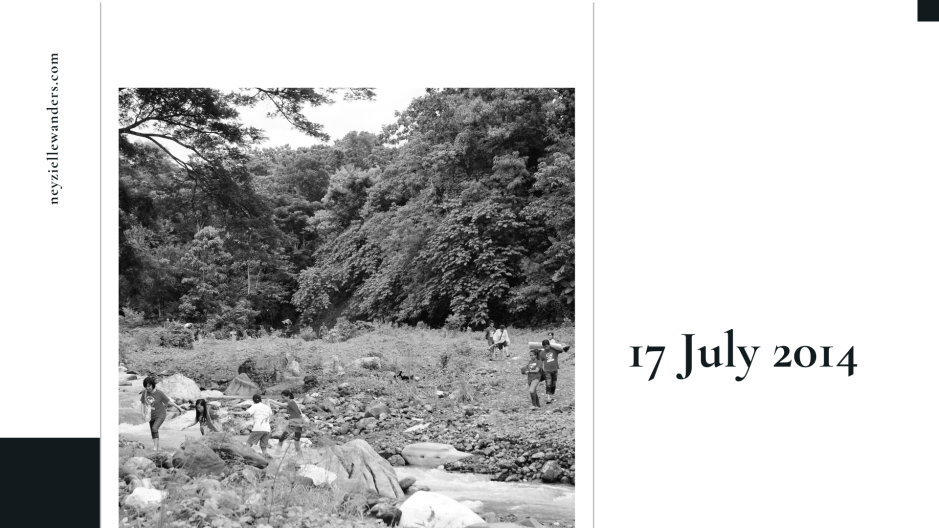
It has been seven (7) years today, which means, this blog post has been sitting on my drafts that long. A long time coming, it is, but I have to finally say it: I’ve moved on, but the memories and sounds of gunshots sometimes still hunt me in my dreams.
I was often asked if I regret joining the medical mission team for Iloilo, and the answer was, is, and will always be a firm NO.
If anything, it made me tougher; it lit my fire for compassion and humanity, and I wouldn’t have it otherwise. Above all else, I’ve gained new friends, new acquaintances– people who will always share the joy and blessing of a second life from that unfaithful day of July 17, 2014.
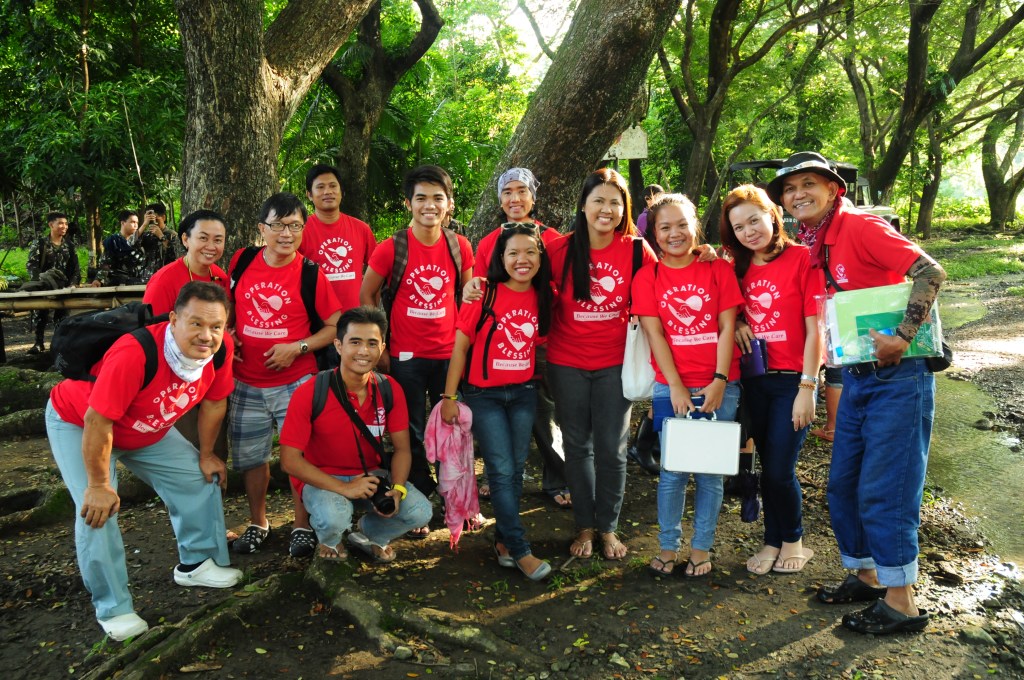
It was a one week medical and dental mission. Areas were literally the far-flung mountain barangays of Iloilo. Everyday, we travel to different military barracks, we do our morning worship with the soldiers, we pack our mission essentials, and set-off to the mountains to help the disadvantaged, and in turn proliferate the message and glory of God.
Everything was normal, or so it seemed.
On our fourth day, we went to Tubungan, Iloilo. That was the day of encounter with the rebels.
You see, I am a generally observant person. I see a lot of inconsistencies, and my instincts are almost always right, but what gave it away was, I saw the place in my dreams weeks before the mission, some kind of déjà vu — but I didn’t think much about it.

That day up in the mountains, people in the community were oddly sharp. They didn’t want to get interviewed, but the elderly women and children were at least ecstatic about the free medicines and dental services.
The mission went as it should– all of the people who came received the medical and dental care they can’t easily access because of the distance from town. It was fulfilling.
Then I vividly remember how a community leader asked us if we could help them carry some medicines and school supplies into a some kind of storage house, just 700 or so steps away from the medical mission site. We gladly obliged, but I saw people eye-ing us from the distance.
My subconscious were telling me something was wrong. I was bothered; hiding the fear from playing with the kids in the open basketball court. There were too many men in the community, I thought, just far too many observing us, observing me observing them.
At around three in the afternoon, the time we were supposed to drive down to town, we stalled. The military personnel told us that the road was slippery because of the heavy rain. Talkative as I am, I inquired to one of the soldiers, he told me they just have to clear the area first, as a protocol. Salute.
The waiting time just added to my reservation. I didn’t know any better, so I just prayed.
As if on cue, one man in the community asked the same soldier if his bunch could hitch a ride down, which the soldier respectfully declined. He said we cannot take other passengers because one, the trucks are full of volunteers, and two, it’s against their mission protocols. I know. I was standing beside them.
I talked to the boys if I could ride with them, but they teased me that I was too short to ride the bigger military truck. So I asked if I could ride at the back of the Hillux, where the doctors were riding, but it was raining so hard they talked me out of it. So I stayed with the girls in the smaller military truck.
Then we set off at around four in the afternoon. I sat at the edge of the truck, trying to shake off the uneasy feeling; but the voice inside my head was so loud it kept shouting “stop” and “danger”. I was literally thinking “anytime from now, gunshots” while taking photos of the road.
I didn’t know what to do, so I uttered a silent prayer of protection.
When I calmed down, I talked about Cagayan and Ilocanos to one of the soldiers who was guarding the rear of the truck where I specifically asked to seat. I wanted to take photos and videos, and the soldiers gladly heeded to my request.
Halfway through the ride, I felt the soldiers tense.
The convoy was noticeably in disarray. I was told that as a military protocol, convoys should at least stay 5-50 metres in proximity from each other; but the bigger truck and the ambulance were manifestly lagging behind as if there were deliberate reasons why they can’t keep up. They had their share of slowing down, we had mine.
As a part of the team and the truck leading the pack, I knew we had to be alert more than usual. I saw the soldiers steady their fingers on the trigger of their machine guns, and I observed how they moved to guard the rear of the truck in a very subtle way. They were very alert, snapping at the slightest hint of a noise. Still, our truck had to stop for very abnormal reasons.
First, because a man with his herd of cows literally stopped the truck to let his livestock get to the other side — this is when the bigger truck and the Hillux finally caught up because we needed a full stop.
Second, on a slippery curve, a man was washing his car — while it was pouring so hard– and he blocked half of the way. We had to slowly maneuver to the right side of the road to get around his 4×4 truck. I thought to myself “Oh, this community is not poor as it seems.” The man even did a salute to the soldiers, and smirked at me, for some reason.
Third, and I remember it was the longest, was because we can no longer see the convoy in our rear.
And then gunshots.
I froze, in my seat, while Officer Pascua shouted “dapa, gapang papunta sa harap” to everybody. I saw the soldiers get off the truck, secure the perimeter, and actually call for a backup. I saw everything, because for what seemed like an eternity, my mind and body were at ease, observing. I stayed sitting at the edge of the truck, it took one officer to hold my wrist and guide me to the front of the truck for me to get my sanity back.
I was still observing, while listening to the gunshot from the near distant. When I was about to join the girls in “front”, I saw the boys struggling to get off the bigger military truck– finally in sight. I saw kuya Zek jump from the Hillux, his slippers nowhere to be seen, and he ran to where we were. I even shouted “Kuya, bilisan mo” to him. He got on safe, but it was evidently a struggle.
The girls were crying — wailing– and praying. I was assuring them we’re going to be safe.
But who would believe the word “safe” when we were literally held at a crossfire?
The gunshots continued, and the brave military men protected us while I heard them calling for a backup.
When the exchange of gunfire subsided, we were told to get off the truck and hide at side, near the humongous truck tires– as if it could shield us from the war that was still building.
I don’t know if it was adrenaline, or maybe because I knew it was coming, but I stayed alert, observing. I helped the soldier to make sure that everyone was accounted for, and when it was my turn to “hide”, I saw men with guns run in the woods, just mere 4-5 metres from where we were ducking.
With them was the very same man who asked if he could hitch a ride. He was wearing a green sweatshirt and black pants. I remember he looked at my direction, and if my memory still serve me right, our eyes locked. He stopped, I froze. For a fraction of second, I knew he deliberated on what to do — because I did the same mentally– but he again started running.
I sure thought I was gonna die.
Few moments passed, and I saw kuya Edwin knock at houses. No one wanted to let us in. Until an elderly man was nice enough to open his doors. We all went there to hide.
I thought it was over, but the gunshots ensued. Then the fear loomed in.
My phone was dead, and I begged one of the volunteers to lend me hers. The first thing I did was to send a message to my mom: “Ma, awan load ko. Hanna ag-open cellphone ko. Na-ambush kami. Jak ammo nu ana mapasamak” (Ma, I don’t have load. My phone won’t open. We were ambushed. I don’t know what will happen).
We stayed hiding. Gasping at the slightest sound outside the house.
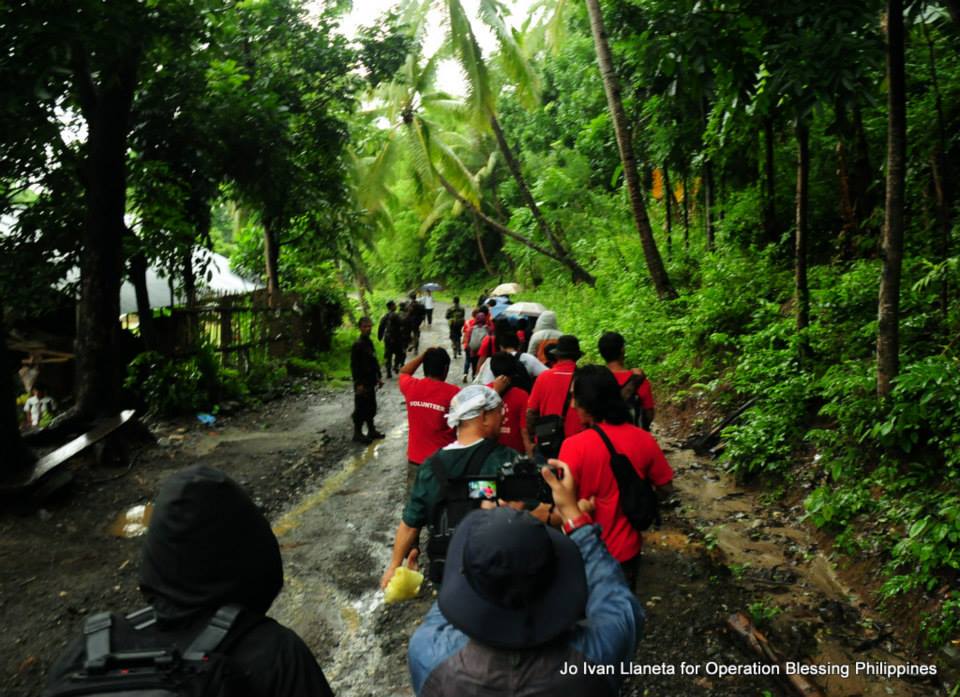
Next thing I knew, we were told to walk in pairs. So we walked down the mountains, and then the gunshots started again.
We hid at the canal. While the water from the mountains was steadily flowing, but no one cared how dirty or wet we were. We ducked, 20-25 people taking shelter in an open waterway, pretty sure that the rebels could still shoot us all dead if they were on the other side of the mountain, the more elevated one on the other side.
And then when it was seemingly peaceful, we walked, and walked for I don’t know how long.
I cried– for the first time that day– when I saw groups of people (media crew, medical officers, military officials, few curious crowd) waiting for us.
I cried. I was alive. We survived.
And that, my friends, is my July 17, 2014 story. The story of how God gave us another chance to live.
People ask me if we still continued the mission. Yes, we went to three more far-flung communities. No weapon formed against the children shall prosper, indeed.
The gunshots are still vivid, but it’s not as loud as before.
It has been seven years. It was beautiful, and it was scary. Yet, it will always be my favorite near-death experience story.
 Neyziellewanders